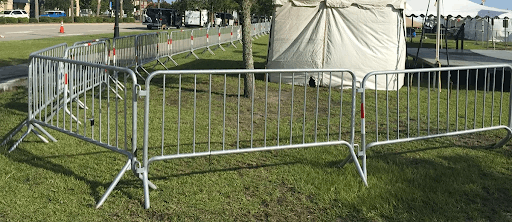
There is the involvement of many people in one place through activities like festivals, concerts, and fairs. If not properly organized, crowded places tend to be very chaotic.Crowd control fencing hire gives organizers a concrete way to demarcate areas, organize queues and move people into designated areas.
With the strategic placing of the barriers, understanding the layout of the event becomes easier. These barriers will help to demarcate different sections like entrances crowd control fencing , performance area, operations area, and pathways. This helps the planners of the event have some points of reference at the event venue.
What Is Crowd Control Fencing?
Fencing for crowd control is a term used to refer to some form of temporary barrier that is intended to direct pedestrian movement and create a barrier between different sections within an event venue. Fencing can be installed in different parts of the venue depending crowd control fencing on the location and the requirements of the event at hand. Different forms of fencing can be used depending on the venue. The main objective of the fence is to delineate different areas in a manner that participants can identify them.
Why Is Crowd Control Fencing Important For Event Safety?
It would make sense to introduce a well-planned barrier system which will bring some more order to your site and help your visitors understand where they should go. Fences could be used to demarcate the boundaries between the public space, stage, technical zone, back stage zone and other areas.
In addition, fences would come in handy in case you needed to control crowd at entrance points, food stands, ticket counters, attraction zones and other places with high traffic. Clearly demarcated lanes would make pedestrian movement easier and allow your staff to manage access to certain venues better.
That is why crowd control fencing would become a very helpful tool in managing access to different venues.
Where Should Crowd Control Fencing Be Placed?
The placement of barriers should be based on how participants enter, navigate, congregate at, and exit from the venue.
Placement of barriers includes:
Entrance/Exits: Barriers determine entrance and exit points, allowing the participant to know access points.
Queueing Areas: Fencing creates designated lanes for ticket check-in, attraction points, refreshments, and other high traffic points.
Performance Areas: Barriers create perimeters for the audience at the performance and technical areas.
Restricted Areas: Fencing designates areas for staff, production, equipment, and services.
Pedestrian Paths: Barriers direct participants along predetermined paths in the venue.
Proper placement allows a definite layout, making pedestrian movement predictable.
Also read:-
How Do You Choose The Right Crowd Control Fencing?
Various aspects need to be taken into account when selecting appropriate fencing to be used, such as the nature of the event, size of the event, venue terrain, and nature of use of each barrier.
Some important things that organisers need to consider include:
Number of Attendees: The number of people attending the event will have an effect on the amount of fencing required.
Nature of the Event: Different events like concerts, sports, festivals, markets, and community events will differ in terms of the movements of pedestrians.
Venue Terrain: Some types of barriers are suited for some types of venue terrains.
Barrier Suitability: Fencing needs to be suitable for the place it is supposed to be installed.
Need for Access Points: The organiser will need to plan access points for attendees, suppliers, and staff.
These and many other considerations will be important in deciding the type of crowd control fencing hire.
How Should Crowd Control Fencing Be Planned Around The Event Site?
The fencing should also be looked at as a component of the entire layout of the event as opposed to being an isolated component. Before the start of the event, it will be easy for the planners to map out the flow of people from the entrance, stage, food area, amenities, and many other critical areas.
In this case, it will be easy to determine how the barriers, entry points, and pedestrian paths will be set up. For example, events using festival marquee hire may need to consider how marquee locations affect nearby pathways and barrier placement.
Coordinating fencing with stages, catering areas, toilets, information points, and other facilities can create a more logical flow throughout the event site.
How Should Fencing Be Managed During The Event?
Fencing installation is merely one step towards effective crowd management. Event organizers must continue to monitor the barriers during the event to ensure they stay as planned throughout.This includes:
Pre-Event Monitoring: This involves inspection of barriers, connections, access points, and pathways before the event begins.
Regular Monitoring: This ensures that barriers are always well-positioned and well-connected.
Crowd Monitoring: This involves monitoring crowded places to see if there are any changes in pedestrian movements.
Access Monitoring: This involves monitoring entry points, exit points, and other access points.
Revised Planning: In case of any event-related changes, authorized persons can modify the barrier plan appropriately.
Effective monitoring helps the event team cope with new developments without derailing the planned site layout.
Conclusion
The crowd control fence can be used to ensure that there are proper boundaries and that the pedestrians will be directed properly at festival and public events. To effectively utilize the fences, one must first understand the number of people who will attend the event, the physical conditions on the site, the entrance and exit points, and the routes which the crowd is likely to take.
This must be done from the site plan to the actual event itself.
also read this – https://globaltrendpoint.com/write-for-us/