You put an empty cardboard box in the recycling bin, leave an old chair out for collection, or clear a pile of garden waste from the backyard. Eventually, it disappears from your property and becomes someone else’s responsibility.
But where does it actually go?
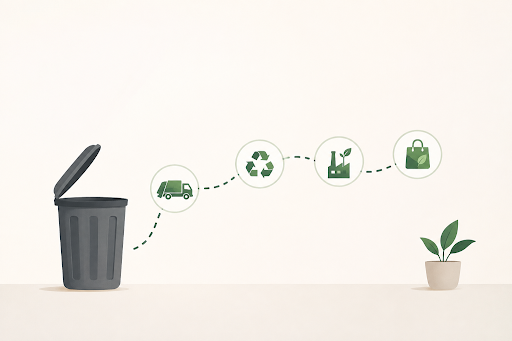
Most of us rarely think beyond the moment something leaves our hands. We call it rubbish, put it in the appropriate bin and move on. In reality, that discarded item may have a surprisingly long journey ahead of it. Depending on what it is Waste journey Australia , its condition and how it was disposed of, it could be reused, recycled, processed into another material, used to recover energy or ultimately sent to landfill.
The bin, in other words, isn’t necessarily the end of the story. It can be the beginning.
One Item Can Have Several Destinations
Not everything thrown away follows the same route.
Waste-management systems are designed around different types of materials and different recovery possibilities. Australia’s waste hierarchy generally prioritises preventing waste in the first place, followed by reuse, recycling and other forms of recovery before disposal.
Consider an ordinary cardboard box. If it is clean and placed in the correct recycling stream, it can be collected, sorted and processed into material that may eventually become part of another paper or cardboard product.
Now imagine that same box soaked with unsuitable waste or mixed with materials that cannot be recycled. Its journey can be very different.
This is why simply putting something into a particular bin does not guarantee what will happen to it. The material, its condition and the quality of the waste stream all matter.
Follow the Journey of Everyday Waste
Think about a few ordinary items found around an Australian home.
The cardboard box might begin its journey in a household recycling bin. After collection, recyclable material can be taken to a sorting facility where different materials are separated. Paper and cardboard can then be prepared for further processing.
Garden branches have a different path. Green waste can be collected separately and processed into materials that have further uses, rather than being treated in exactly the same way as general household rubbish.
Then there is the old sofa sitting in the corner of a garage. If it is still usable, reuse may be an option. If it is damaged, its various materials may need to be assessed for recovery or disposal.
Renovation waste creates an even more complicated journey. A single project might produce timber offcuts, tiles, packaging, fixtures and other materials. Treating all of it as one identical type of rubbish can make recovery more difficult.
This is why planning waste removal before a major clean-up can be useful. When a renovation, garden project or property clear-out produces more waste than normal household bins can handle, choosing a practical waste-removal option can help keep materials organised from the beginning.
The interesting part is that these objects may all leave the same house, yet they can end up travelling in completely different directions.
The Wrong Turn: When Recycling Doesn’t Get Recycled
There is an uncomfortable side to the recycling story that is easy to overlook: contamination.
A recycling bin can contain items that do not belong there. When unsuitable materials are mixed with recyclable material, sorting becomes more difficult and the intended recovery process can be disrupted.
Darwin provides a useful example. Recyclable materials collected through the city’s household recycling system are taken to a Materials Recovery Facility, where materials such as paper, cardboard, plastics and metals can be sorted for further processing.
But contamination can change that journey. The City of Darwin notes that heavily contaminated recycling may ultimately be sent to landfill rather than continuing through the recycling process.
That means the simple act of putting something into the yellow-lid bin isn’t the whole story.
The quality of the material entering the system matters too.
It is a useful reminder that responsible waste management doesn’t end with owning several different bins. It starts with understanding what belongs in each one.
The Place Where Several Journeys Meet
The Shoal Bay Waste Management Facility in Darwin offers another interesting perspective.
It is easy to picture a waste facility as simply a place where unwanted things are buried and forgotten. Modern waste infrastructure can be much more complicated than that.
Shoal Bay incorporates several different functions, including waste transfer, recycling, green-waste processing, reuse and landfill. The facility also has the Reviva Reuse Shop, giving suitable unwanted items the possibility of another life rather than immediately treating them as disposable material.
There is another surprising part of the story. Landfill gas generated at Shoal Bay is captured and used to produce renewable energy.
That doesn’t make landfill the preferred destination for waste. Australia’s waste hierarchy still places disposal below prevention, reuse and resource recovery. But it shows that even the final stages of waste management can involve processes designed to recover value.
What Happens After We Stop Seeing It?
The most interesting thing about rubbish may not be where it disappears, but what happens after we stop seeing it.
A cardboard box can become raw material for another product. Garden waste can be processed into useful organic material. An unwanted item may find another owner. Other materials may be recovered, while some eventually require disposal.
The journey depends on decisions made long before a waste facility receives the material.
For households and businesses, that means thinking about waste before the clean-up begins. Separating suitable materials, avoiding unnecessary waste and arranging an appropriate collection method for larger projects can all help create a more organised waste stream.
We may think we are simply throwing something away.
In reality, we are often choosing the next stop in its journey.
also read this – https://globaltrendpoint.com/write-for-us/